Solva Transfers · Mini guide
Ronda in a day: your walking guide
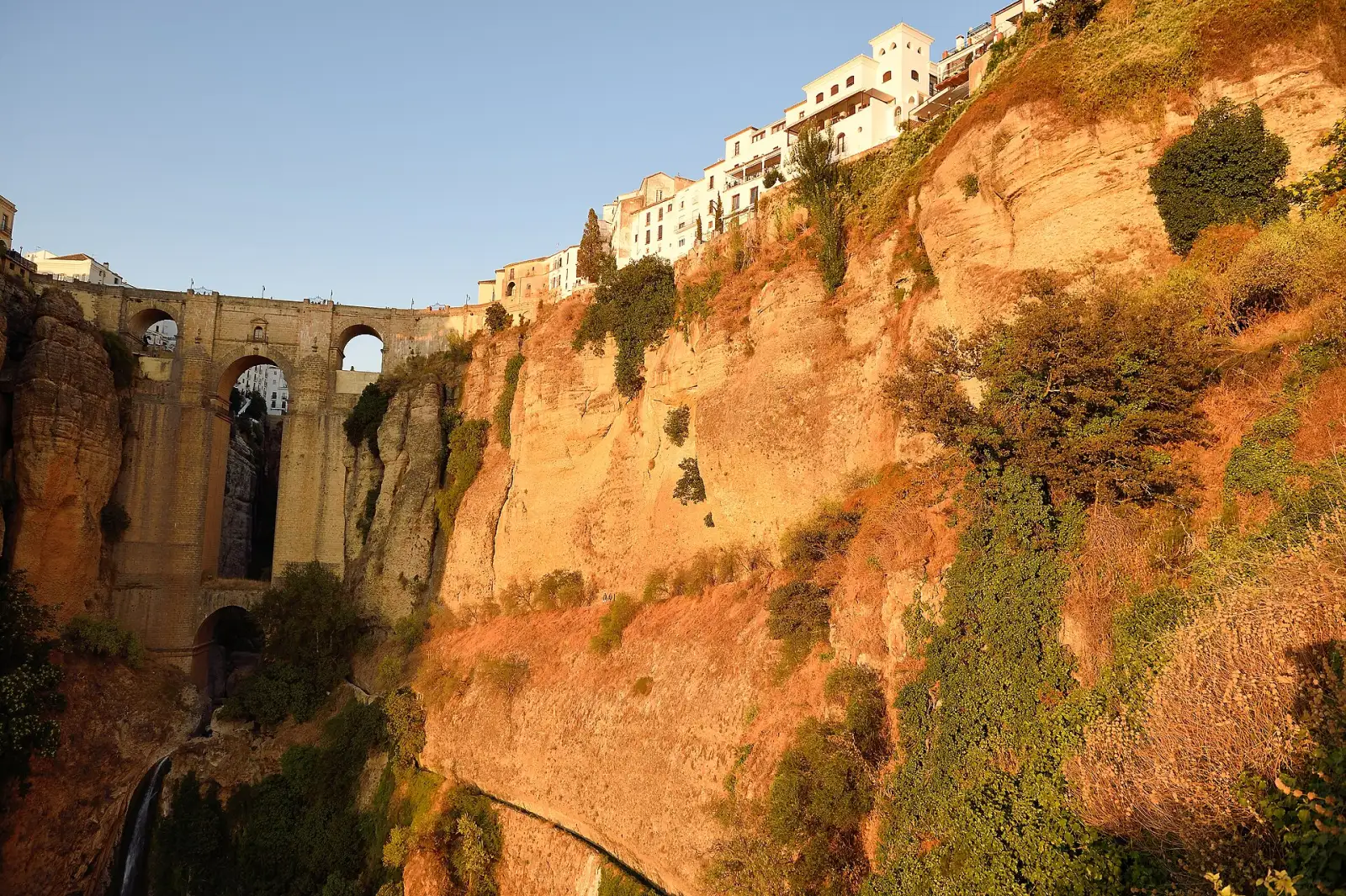
Ronda sits on a rocky plateau split in two by El Tajo, a gorge over 100 metres deep. The newer town (El Mercadillo) and the old Moorish town (La Ciudad) are joined by the Puente Nuevo. Everything below is walkable, but the old town is hilly and cobbled.
Ronda is very steep in places, and the gorge paths and the water mine involve many steps. If anyone in your group has limited mobility, stick to the bridge, the squares and the Alameda, which are mostly flat.
Where your driver drops you
Your driver will drop you near the bullring and Plaza de España, a couple of minutes on foot from the Puente Nuevo; the exact spot depends on traffic on the day and will be agreed with your driver. Being picked up in the same place makes it easy to find each other, as the whole route below starts and ends here.
Before you go
- Comfortable shoes with good grip: the streets are cobbled and many paths are steep.
- Water, a hat and sun cream in summer, when inland Ronda gets much hotter than the coast. Bring a layer in winter; it is noticeably colder than the coast.
- Check current opening hours before you go. The bullring and Casa del Rey Moro open daily; the Arab Baths have shorter hours on Mondays, Saturdays and Sundays.
- If you want to walk the Camino del Desfiladero del Tajo (the walkway below the bridge), book online in advance: places are limited and children under 8 are not allowed.
- Some card and some cash: most places take cards, but small cafés and churches may prefer cash.
Your walking route
- 1
Real Maestranza bullring · 45 min
One of Spain's oldest bullrings, opened in 1785, with a museum on horses and bullfighting. You can walk on the sand and around the stands; an audio guide in English is available.
- 2
Alameda del Tajo · 15 min
A shady 19th-century park right behind the bullring. Walk to its far edge: the balconies hang over the cliff with wide views of the valley and the Serranía mountains.
- 3
Plaza de España and Puente Nuevo · 20 min
The 18th-century bridge spans the gorge at its deepest point. Look down from the bridge itself and from the Mirador de Aldehuela, the small viewpoint beside the Parador.
- 4
Plaza María Auxiliadora and the path into the gorge · 40 min
Just across the bridge, this small square has views of the cliffs. From here a steep path zigzags down to viewpoints facing the bridge; allow about 15 minutes down and more coming back up, which is hard work in the heat. Part of the route below the bridge is now the ticketed walkway.
- 5
Plaza Duquesa de Parcent and Santa María la Mayor · 20 min
The heart of the old town, with the main church built over the old mosque. Wander the quiet lanes around it, lined with old palaces and convents.
- 6
Casa del Rey Moro and La Mina · 45 min
Terraced cliffside gardens and a 14th-century water mine cut into the rock, with over 200 steep steps down to the river. The steps are narrow and can be slippery; not for anyone with claustrophobia or knee trouble.
- 7
Puente Viejo and the Arab Baths · 35 min
Walk downhill to the Puente Viejo, the oldest of Ronda's bridges, and on to the 13th-century Arab Baths, some of the best-preserved in Spain. Note it is all uphill on the way back.
- 8
Back up to the Puente Nuevo · 20 min
Climb back through the Arco de Felipe V or through the Jardines de Cuenca, terraced gardens on the new-town side with a side view of the bridge. From there it is a short walk to your pick-up point.
Where to eat
- Rabo de toro (oxtail stew) is the classic local dish; also try Serranía lamb, game in season and local wines from the Ronda area.
- Plaza del Socorro and the streets around it, such as Calle Nueva and Calle Los Remedios, have plenty of tapas bars used by locals as well as visitors.
- Restaurants with terraces right on the gorge charge for the view. For better value, eat a few streets back and come to the edge for a coffee.
- For something sweet, look for yemas, egg-yolk sweets sold in Ronda's cake shops.
Best photo spots
- The viewpoints at the bottom of the path from Plaza María Auxiliadora: the full height of the Puente Nuevo from below.
- The Mirador de Aldehuela and the Parador side: the bridge and the gorge in morning light.
- The balconies of the Alameda del Tajo, looking over the valley, best late in the afternoon.
- The Puente Viejo, with the old town walls rising above it.
If you have time
- Camino del Desfiladero del Tajo: a walkway with helmets through the bottom of the gorge, from the Puente Nuevo towards the Arab Baths. Book ahead; no children under 8, pushchairs or wheelchairs.
- The small interpretation centre inside the Puente Nuevo, where a room once used as a prison sits in the bridge's central arch.
- Palacio de Mondragón, an old palace in the old town that houses the town museum, with patios and cliffside views.
- The Murallas and Puerta de Almocábar, the old walls and main gate on the south side of the old town.
Your driver takes you there, waits and brings you back; they are not a tour guide. Opening hours and prices change: check them on the official websites before you go. Need anything on the day? Call +34 666 07 92 32.